

An Artist’s Journey for a 1923 Lloyd Loar-signed F-5 Mandolin
For Emily Wilson, obtaining an elusive and valuable 100 year-old Gibson mandolin isn’t just about an instrument, it’s about connection…and it’s the role of her lifetime.

Emily Wilson
The Bluegrass Ambassador
As Emily Wilson packs her bags for the 2023 RockyGrass Music Academy and Festival in Lyons, CO, she pauses a moment to post a status update on her Facebook page, “Packing for Rockygrass Academy. I have a whole library of loaner instruments. Does anyone’s kids need to borrow an instrument for class?” For nearly 20 years, Denver-based professional musician and mandolin instructor, Emily Wilson, has been a staple in the Colorado Bluegrass community. On this particular day of the week, a 35-year-old Wilson is preparing for a week-long stay at the famed bluegrass fest and academy. As always, she wants to make certain no child goes without being able to play an instrument and uses her social media flex to extend additional resources to kids in need. “Many children do not have the funds to try an instrument and having a quality tool makes all of the difference in early music education,” explains Emily. “I loan instruments to children because I have been fortunate enough to have several instruments donated to my studio over the years. If I can provide a student with an instrument that inspires them it helps in fueling arts and music.”

Born and raised a Denverite, Emily Wilson’s footprint in the bluegrass scene extends beyond just loaning instruments to children in need. She’s also a teacher, jammer, and bandmate. “She really is a great ambassador for Colorado Bluegrass.” shares former CBMS President, Kevin Slick. “She’s one of those kinds of people that is everywhere. You see her in lots of different places and she’s always bringing new people into this type of music. She’s the type of person people want to play with in a jam session.”

It’s no wonder Wilson has developed a reputation amongst her peers as being reliable, responsible, and a professional. Which is presumably why 2 years ago she was asked to take on the role of a lifetime. In 2021, Emily Wilson was asked by the sons of her former mandolin instructor, the late Ely Karasik, to be the “official curator” or caretaker of a 1923 Lloyd Loar-signed Gibson mandolin. For those new to the acoustic scene, Loar F-5 Gibson mandolins are still widely considered to be the pinnacle in the evolution of the mandolin. They are, as many describe, the stradivarius of the mandolin world. To be in the very presence of one of the original Lloyd Loar mandolin designs ever produced is perhaps equal to seeing an original copy of the Declaration of Independence for bluegrass enthusiasts. It’s a big deal.
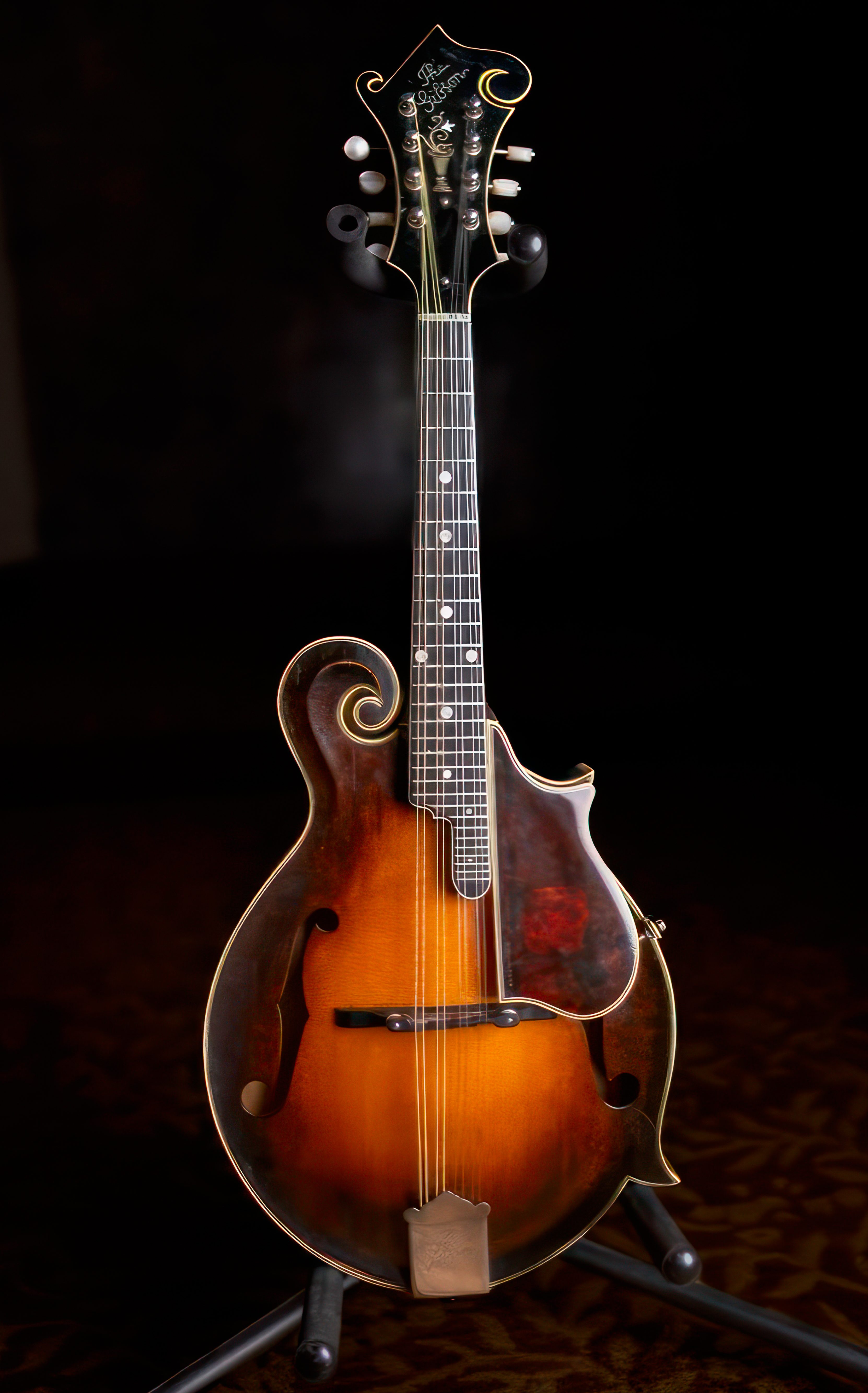
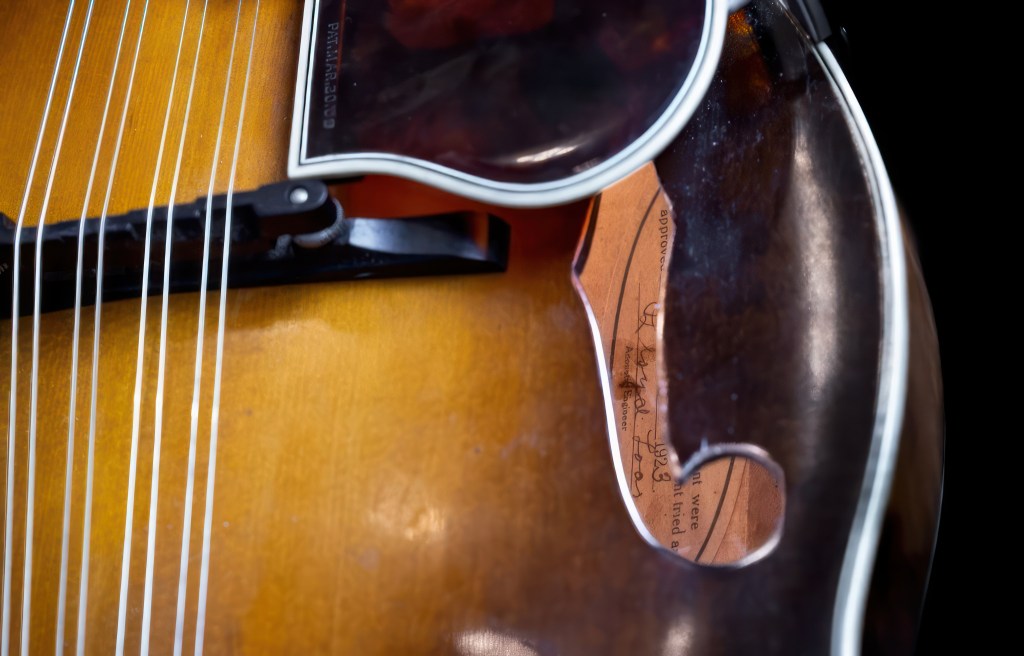
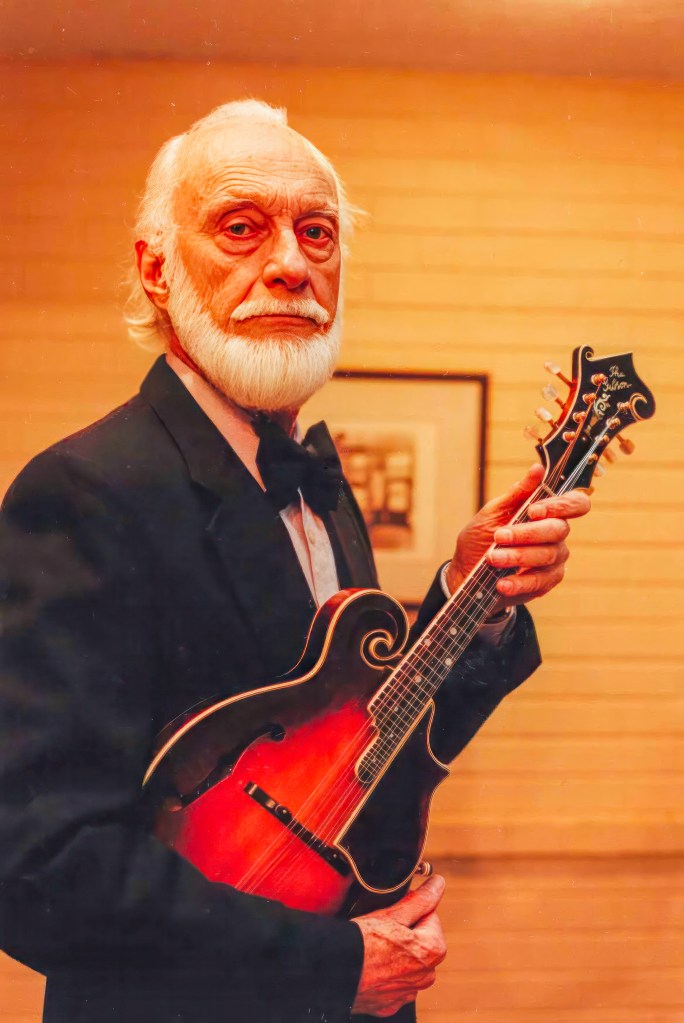
Initially, the hope was to allow Emily the chance to safeguard the instrument while Karasik’s sons found the century-old mandolin a new owner. However, as time went on, it became clear to Wilson that her connection with the instrument extended beyond just safeguarding it. For her, there was a spiritual kinship with the instrument as it belonged to her former mandolin instructor who passed away in 2015. “I first met Ely Karasik when I was 11 years-old through my Mom who performed with the Denver Mandolin Orchestra. I took some lessons from him,” reminisces Wilson. “Ely was a brilliant mandolin player. He was very methodical, it involved many technical drills. I wish I could take lessons from him today to be honest”.
However, Emily doesn’t just want to “own” the mandolin of her former teacher, she also wants to “extend access” with it as part of a project she created known as the Karasik Mandolin Project. For this reason, the 35-year-old mandolin player has decided to embark on the most important role of her musical career, purchasing a $115,000 appraised 1923 F-5 Lloyd Loar-signed Gibson mandolin.
Pioneers in Music
Lloyd Loar and Bill Monroe
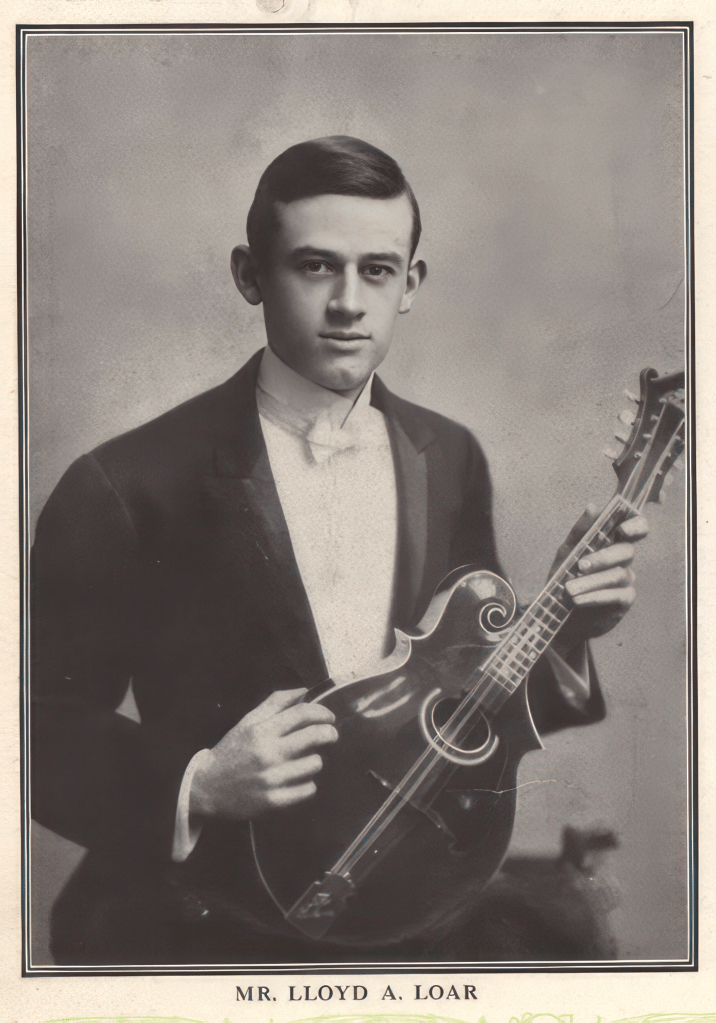
When musician, and acoustic engineer Lloyd Loar designed the F-5 mandolin in 1922 for the Gibson Company, bluegrass had yet to be invented as a genre of music. Originally, the instrument was designed to be played in concert halls by classical mandolin orchestras. Loar wanted an instrument that could clearly be heard in a large ensemble. Unlike their F-4 predecessors, the F-5s were part of a “master model” series for Gibson. They were the first of their kind. “Designer Lloyd Loar was an acoustic engineer. He did not actually build the instruments … .He knew what sounded good….that’s what Lloyd Loar gave Gibson,” shares biographer and luthier expert Roger Siminoff, author of The life and work of Lloyd Allayre Loar.
As such, between 1922 and 1924 Lloyd Loar designed a series of instruments that departed from previous models. In particular Loar made a series of changes to the mandolin design including the use of violin-style f-holes (instead of round or oval soundholes), increasing neck angle pitch to 5.5° (from the previous 4°), use of a two-piece adjustable two-footed bridge and a lengthened neck. Furthermore, the design of the instrument utilized “tap tuning”. As Siminoff elaborates, “The parts of the F-5 Gibson were tapped tuned with a small hammer. Once the parts were tapped to hear their frequency, they were then carved and shaped until they reached the intended frequency. The entire instrument when played would have a certain harmony that produced a perfect note. The result of Loar’s sound engineering was a masterful instrument which resulted in a clear percussive and crisp sound.
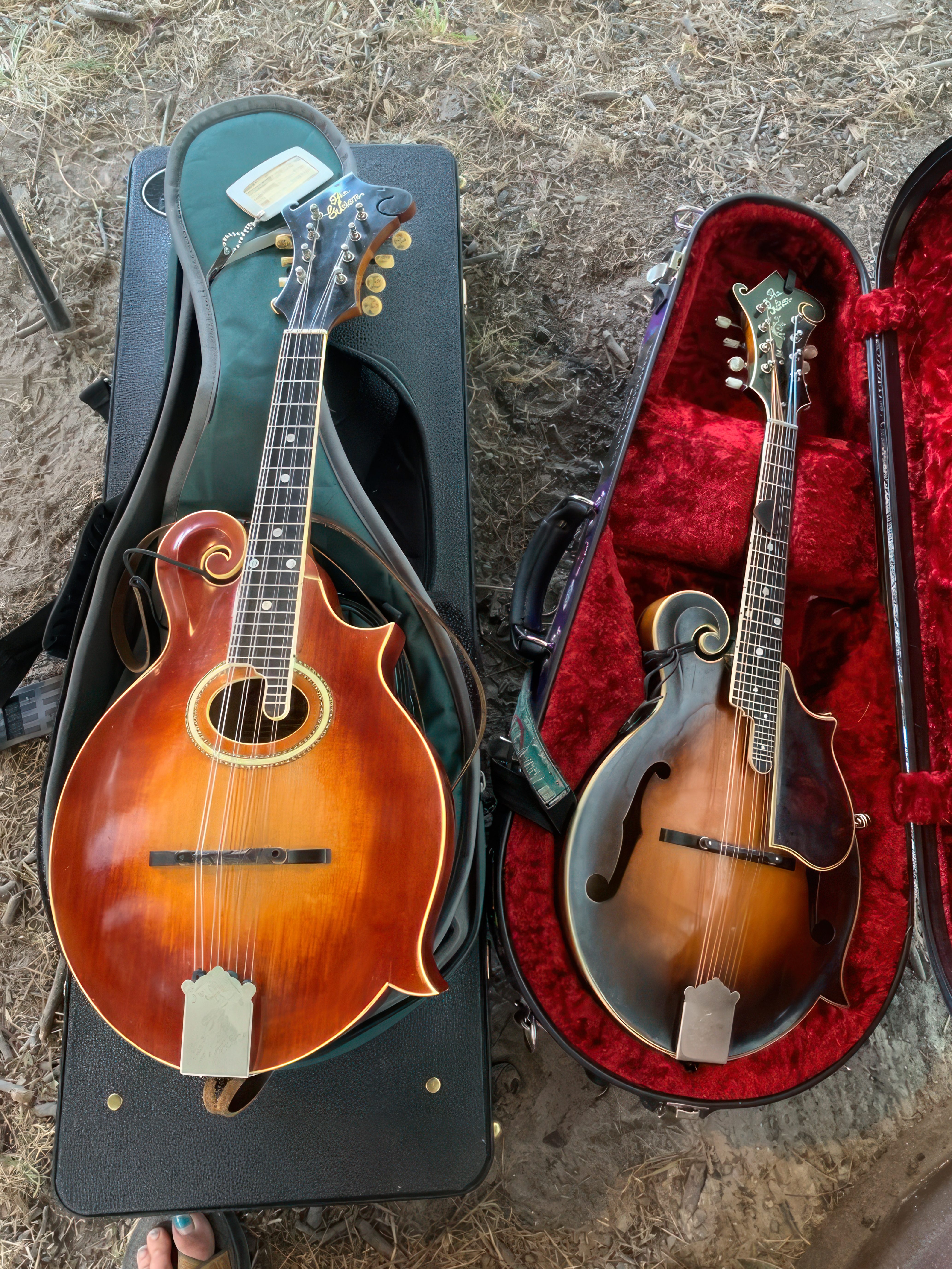
Despite the revolutionary changes Loar made to the mandolin during his tenure as acoustic engineer at the Gibson Company between 1922 and 1924, it seems his mandolin never quite “caught on” with the public. “It was a commercial failure! The F-5s were initially not a big hit or success” proclaims acoustic expert and founder of the famed Gruhn Guitars in Nashville, T.N, George Gruhn. Roger Siminoff offers a contrasting opinion that the instruments were successful. He added, “building about 80 or 90 high-end mandolins a year was a boon to Gibson’s sales. Especially at a time when the U.S. population was one-third of the size today, and the music market was probably one sixth or one seventh of what it is today, if not smaller. However, the success of the Master Models was short-lived.”
Throughout the 1920s and 1930s mandolin orchestras and the mandolin itself began to decline in popularity due to changing social and cultural trends as well as the emergence of jazz, swing, country music and blues. In addition, technology such as radio began to transform the way music was consumed as well as recorded. No longer were Americans traveling to music halls or Opera houses to sit in front of live orchestras or instrumental ensembles. Instead, recorded music made its way into people’s homes. “In the 1920s, recording technology made jazz music an international craze,” explains Loar Lorest Tony Williamson. “The usefulness of mandolin, however, was completely lost in that genre. In an ensemble that included the commanding volume of cornets, trombones and bass drums, and with only 5k bandwidth in radio and recording technology at that time, the mandolin simply could not be heard.”
Likewise, the rise in popularity of the banjo and guitar would further impact the demand and quality of mandolins during the 30s and 40s. Luthiers were summoned away from mandolin production lines and redirected to build guitars such as the Gibson L-5 which became a distinct sound of Maybelle Carter and the Carter Family. “Gibson lost the ability to make a good mandolin. They didn’t take time to carve the front and backs efficiently. A lot of previous woodworkers had moved to other departments to build guitars and banjos. It didn’t sound very good because it had too much wood in it,” explains Tony Williamson. Gruhn adds, “There was a period where classical music was dead (or close to it) and while some country artists featured mandolin, it wasn’t as popular as what bluegrass would become. The value of Gibson mandolins was pretty low and others were too. Mandolin was not at the forefront. The market was flooded and many people were able to purchase these instruments second-hand.”
However, that all changed in 1946 when musician Bill Monroe walked past a Miami barber shop with a 1923 Lloyd Loar-signed F-5 mandolin for sale in the window. What happened next was nothing short of a musical revolution as Monroe experimented with a legendary chop using the instrument that would become synonymous with the sound of modern bluegrass music. “Bill Monroe made the Lloyd Loar F-5 Gibson mandolin the signature sound of bluegrass,” explains George Gruhn. “Monroe found tones in the F-5 that suited what he wanted to do especially with the use of chop chords. He invented a whole new genre of music!”

“Bluegrass would have never happened if Bill Monroe would have never acquired the Lloyd Loar instrument.” Asserts Mike Shroeder, founder of the Louisville Mandolin Orchestra and owner of a 1924 F-5 Lloyd Loar-signed Gibson mandolin. “Monroe was able to capture a sound due to the power of the instruments which were initially designed to be played in concert halls without a PA system”.
It’s no doubt that owning a historic 100 year-old mandolin, identical to the design Monroe used, would possess a certain level of intrigue and fascination for bluegrass enthusiasts. According to Roger Siminoff, between 1922 and 1924, Lloyd Loar designed and signed somewhere between 270 – 300 F-5 mandolins for the Gibson Company before leaving in 1924. However, due to their limited numbers, unique design and historical importance, the Lloyd Loar-signed F-5s have become some of the most sought after instruments on the acoustic market for musicians, collectors and museums.
“After Bill Monroe made it a signature sound of bluegrass in the 1950 and 60s the value of the Lloyd Loar mandolins increased,” explains George Gruhn. “In 1968 they cost about $1600. Throughout the 1970 -80s the value of mandolins went up substantially. They peaked in value around mid 2006- summer of 2007 when the mandolins were pushing $200,000.” Tony Williamson adds, “The desirability of a Lloyd Loar mandolin will always be there just like a stradivarius of violins. People are always comparing their mandolin to a Lloyd Loar. They are the ultimate, they are the holy grail of that style of mandolin.”
The Karasik Project
Sharing the Legacy of a 1923 Lloyd Loar Mandolin
Tim O’brien playing his original tune, “Land’s End” on the Karasik Lloyd Loar mandolin. O’brien also talks about playing in the Opera Othello with Ely Karasik. The video is part of the Karasik Mandolin project. Wilson’s hope (if she is able to acquire the instrument indefinitely) is to help expand recording access and availability to musicians. This video and others can be seen on Wilson’s mandolin Youtube Channel, The Karasik Mandolin Project.
What is perhaps extraordinary about Emily’s story is the vision she has for the historic Karasik mandolin if she is able to purchase it. In 2021, when Randy Karasik asked Emily Wilson if she would be interested in becoming the curator of his father’s mandolin, he also asked that in exchange for the use of the mandolin to provide videos of it being played and used. “This is where my vision of the Karasik Mandolin project was essentially born” explains Wilson. “The purpose of this project is to provide access to a variety of mandolin artists the ability to play a historic Lloyd Loar-signed F-5 Gibson that wouldn’t have access to otherwise due to the cost and rarity of the instrument itself. “I want to put instruments in the hands of musicians who deserve it”.
Furthermore, as the current guardian (and prospective buyer) of the 100 year-old instrument that was recently appraised at around $115,000, Wilson is responsible for making sure no damage is accrued on the instrument. It involves constant attention, observation, and care. She has “rules” for the instrument including putting it away when she sees people “getting rowdy” and never taking it out when it rains or in adverse conditions. “Oh, it [the 1923 Gibson F-5 Mandolin] stays with me at all times. I even have a tracking system that is connected to my phone,” Emily Wilson shares. “And when I lock it up, I include a gun lock for protective measures”.
While keeping the mandolin safe involves an enormous amount of responsibility, purchasing a 1923 Gibson F-5 is a monumental challenge in itself. In order for Emily to finance such an expensive piece of musical history, she will need the help of investors and charitable donations, all equalling well over $115,000 which is an extraordinary task for your average musician. “Local musicians don’t make much at all,” explains Emily. “The average pay for a local bluegrass band is only a couple hundred dollars and recently some venues started resorting to ‘bar tabs’ instead of paying musicians for their shows. Which doesn’t help me buy the mandolin, it results in my band getting a DUI”.
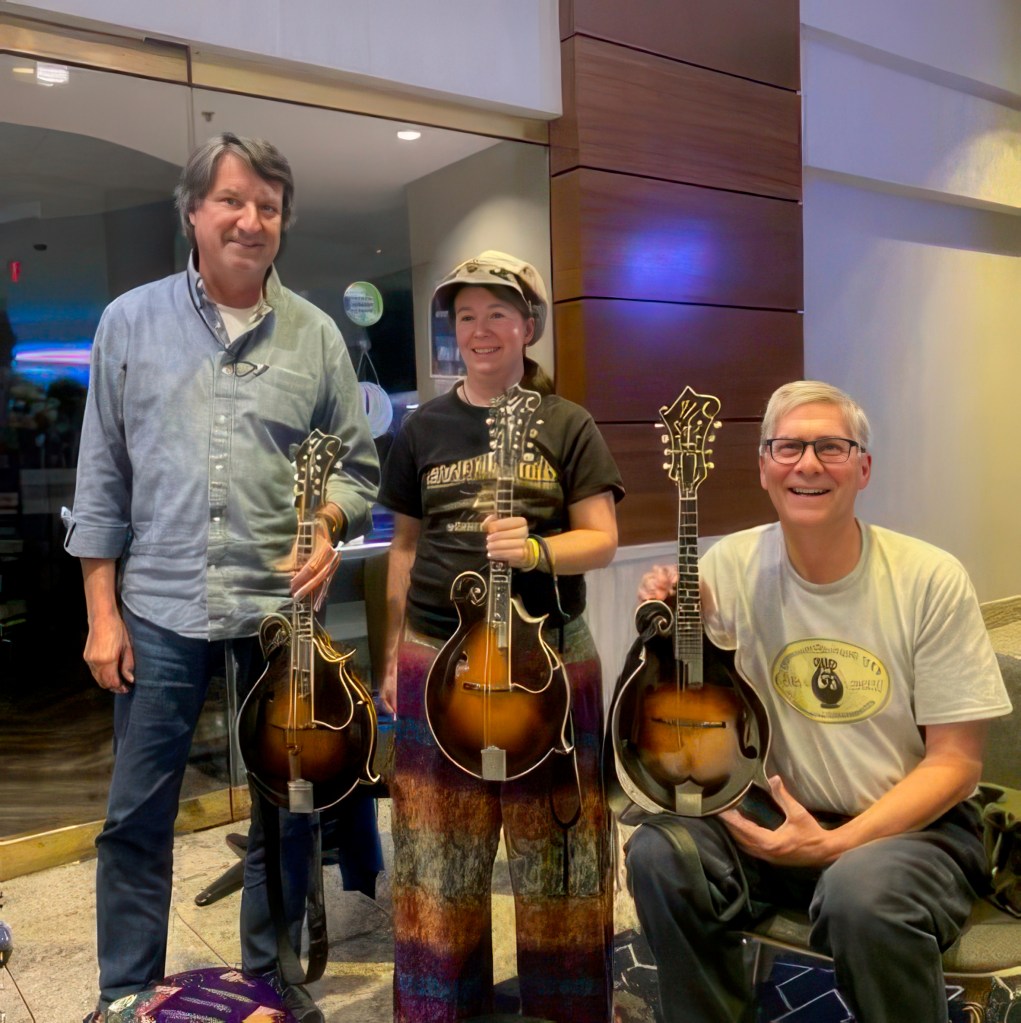
What Emily doesn’t earn from playing gigs with her band, Roadside Distraction, she attempts to make up for by providing mandolin lessons to local Denverites. “Right now I have about 40 students, but that number fluctuates. I think I’ve taught over a few hundred students….but it’s not enough to personally buy the mandolin. I will need help..It’s not like banks are in the business of granting a $115,000 loan for a mandolin.”
“That is why Emily’s approach to this F-5 1923 Gibson mandolin is really exciting. She is working at doing something that is the equivalent of a start up going to a venture capitalist. She’s trying to preserve a tradition here. Unless you happen to be incredibly wealthy you can’t really afford to buy one of these historic instruments and these instruments deserve to be played,” shares longtime friend and musician Mike Shroeder. “For some rich folks to collect these things up and put them on their wall that doesn’t do a lot of good. Not only is she out there in the community promoting her own work, she’s allowing others to see the mandolin up close and personal. She essentially has a vision to be a museum curator that is accessible for all people.”
100 years ago Lloyd Loar designed and introduced an instrument that would revolutionize American music, the F-5 Gibson mandolin. The design would enable Bluegrass legends such as Bill Monroe to invent a genre of music that would captivate a nation and provide generations of pickers and listeners the ability to share and connect through music. However, while Monroe may have “invented” the genre it is community musicians like Emily Wilson who carry on its legacy. As a mandolin instructor, musician and “bluegrass ambassador”. Wilson is one of the many reasons why bluegrass remains strong in places such as Colorado. Which is exactly why she wishes to purchase the Karasik mandolin of her former instructor, Ely Karasik. For her, acquiring a $115,000 instrument isn’t just about vanity, it’s about deepening the roots of bluegrass and allowing fellow musicians access to experience historic instruments. Yet, the 35-year-old artist will need the financial support of the community she supports to make her vision a reality. “Everyone’s Loar story is different,” shares Emily as she takes a swig of coffee. “And this is mine.”
ADDITIONAL RESOURCES
- For more information on how you can help donate to Emily Wilson’s Karasik Mandolin Page please click here → The Karasik Lloyd Loar Project
- The Karasik Mandolin Project → Karasik Mandolin Youtube Channel
- Emily Wilson Karasik Mandolin Project Contact information:
- Email: mandofiddleem@gmail.com
- Phone: 303-656-6416
SOURCES
“David Harvey.” 8 Aug. 2023. Master Luthier for Gibson Original Acoustic Instruments. Interview
“Emily Wilson.” 4 Aug. 2023. Karasik Mandolin Project. Interview
“George Gruhn.” 16 Aug. 2023. Gruhn Guitars. Interview
“Kevin Slick.” 8 Aug. 2023. Colorado Bluegrass Music Society Board Member. Interview
“Lloyd Loar Biography.” Siminoff, http://www.siminoff.net/lloyd-loar. Accessed 21 Aug. 2023.
“Lloyd Loar Mandolin ‘Mon.’” Mandolin Central, http://www.mandolincentral.com/lloyd-loar-mandolin-mon. Accessed 21 Aug. 2023.
Mandolin Archive, http://www.mandolinarchive.com/. Accessed 21 Aug. 2023.
“Mike Schroeder.” 4 Aug. 2023. Louisville Mandolin Orchestra. Interview
“Roger Siminoff.” 16 Aug. 2023. Lloyd Loar Biographer and Luthier Expert. Interview
“Suzie Soloman.” Former Colorado Bluegrass Music Society President. 4 Aug. 2023.
“Tim May.” Musician. 23 Aug. 2023.
“Tony Williamson.” 24 Aug. 2023. Mandolin Central. Interview
“THE BILL MONROE 1923 GIBSON/LOAR FL-5.” https://www.angelfire.com/ky2/mybluegrass/BMFMANDO.html. Accessed 21 Aug. 2023.
Williamson, Tony. Mandolin Central, http://www.mandolincentral.com/. Accessed 24 Aug. 2023.

2 responses to “The Karasik Mandolin Project”
Great first episode of a blog I will follow. Well written and thoroughly researched, I appreciate the work that has been put into this. And Emily Wilson does all the right things for all the right reasons. I know Ely would have been proud.
LikeLiked by 1 person
Great article. I know a few of the characters mentioned and have met the author.. I’ll check back and see how I can help.
LikeLiked by 1 person